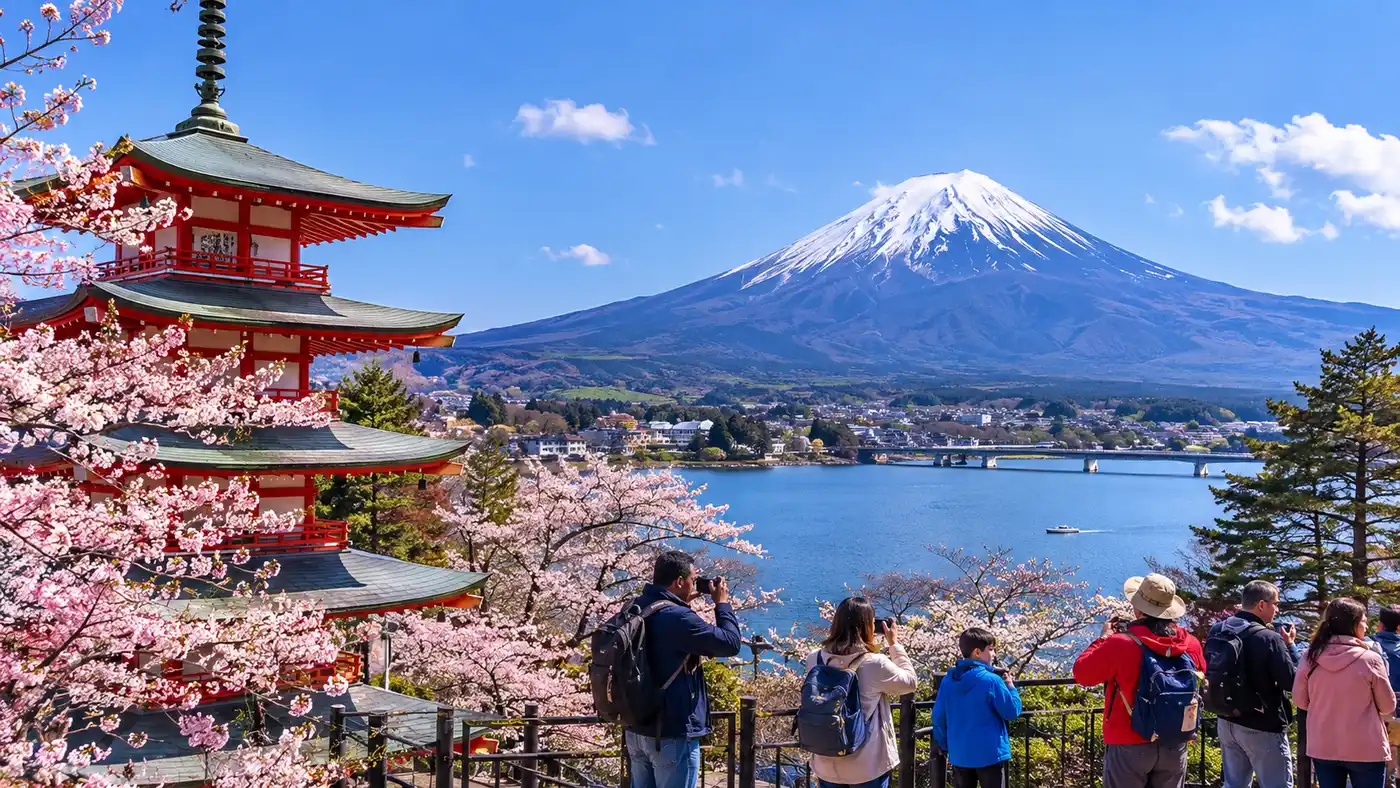
Mt Fuji and Hakone Day Trip from Tokyo
Most travelers landing in Tokyo stare at the map and realize two bucket-list destinations sit just south of the city: Japan's iconic snow-capped volcano and the hot spring valleys of Hakone. Booking a day trip from tokyo to mt fuji and hakone sounds like the ultimate itinerary hack. You get to see the sacred mountain up close, cruise across a caldera lake, eat black eggs boiled in sulfuric vents, and ride a ropeway through mountain fog, all before sleeping in your Tokyo hotel bed.
It is totally doable. But doing both in around 12 hours is a whirlwind sprint across two sprawling geographic areas. Between the shifting mountain weather and the tangled webs of regional transport, this day will either be your fondest memory of Japan or a marathon of looking at bus tail lights. Here is the unvarnished guide to making the journey work, whether you book an organized seat or piece it together on your own.
Book your mt fuji from tokyo experience:
Can You Actually Do Mt Fuji and Hakone Together?
Geographically, Mt Fuji and Hakone look neighboring on a paper map. Hakone sits tucked inside the Fuji-Hakone-Izu National Park, just southeast of the volcano itself. The distance between the Fuji Five Lakes area and Hakone-Yumoto station is only about 45 kilometers. That makes it seem trivial. In reality, a massive mountain ridge separates the two basins, and no direct high-speed train cuts through the middle.
If you choose to do this by public transit without a tour operator, you will spend roughly six hours of your day in transit. You will catch a train from Shinjuku, swap to a highway bus toward Gotemba, catch a local bus up into the Hakone mountains, ride a cable car, board a ferry, and then take another train back to Tokyo. I have done this route self-guided. It works if you treat the transit as part of the fun, but it leaves almost zero room for lingering over lunch.
Pro tip: Pick up a physical Odakyu Hakone Freepass at Shinjuku Station if you plan to tackle this unguided, as tapping your IC card for every individual tram, bus, and ferry quickly bleeds extra cash.
Organized buses have an obvious edge here. A dedicated coach picks you up in central Tokyo, climbs directly to Fuji 5th Station in the morning, cuts across the highway directly to Lake Ashi, and lets you sleep while someone else navigates the mountain hairpins. It removes the anxiety of missing a once-an-hour rural bus connection at Gotemba Station.
Still, organized groups run into their own villain: the Tomei Expressway on a weekend afternoon.
Planning Your Route: DIY vs Guided Coach
Deciding how to tackle your excursion comes down to your tolerance for logistics. If you hate fixed group schedules and want to wander shrines at your own pace, public transit wins. If you want maximum sights with minimal logistical head-scratching, an organized coach is the better bet.
| Option | Estimated Cost | Travel Time | Best For |
|---|---|---|---|
| Guided Bus Tour | ¥13,000 - ¥19,500 | 10 to 12 hours total | First-timers wanting ease and guaranteed stops at both sites |
| Self-Guided (Train + Bus) | ¥7,500 - ¥11,000 | 12 to 14 hours total | Solo travelers wanting independence and flexible pacing |
| Private Car Charter | ¥65,000 - ¥90,000 | 9 to 11 hours total | Small families or groups wanting total itinerary control |
For independent transit fans, taking the train out of Shinjuku on the early Odakyu Romancecar gets you to Hakone-Yumoto by 8:30 AM. From there, you do the classic Hakone loop backward to beat the tour crowds, eventually ending up in Gotemba where you can grab a local bus toward Lake Kawaguchiko. Trying to do it in reverse usually strands you in Hakone after the ropeways shut down at 5:00 PM.
The Classic Itinerary: What a Packed Day Actually Looks Like
If you sign up for a typical guided bus tour or choose a pre-packaged mt fuji & hakone day tour from tokyo, your schedule runs like clockwork. Departure is almost always around 7:45 AM from Shinjuku or Tokyo Station.
The morning usually begins at Mt Fuji 5th Station, sitting at 2,305 meters on the Subaru Line. When the road is clear, you step off the bus into thin, crisp air. You get cedar shrines, souvenir stalls selling canned mountain oxygen, and a vantage point above the cloud layer looking down over the valley. If bad weather closes the road, operators pivot to Oshino Hakkai or the Fuji Heritage Center instead.
Note: In winter and early spring, snow frequently blocks the upper access road to the 5th Station, so expect your tour to substitute lower viewpoints around Lake Kawaguchiko.
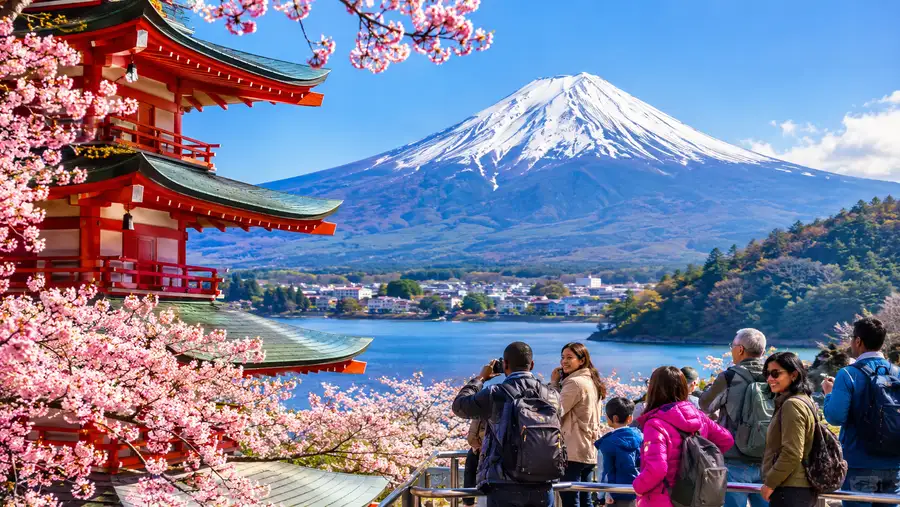
By midday, everyone piles back into the vehicle to head down toward Hakone. The journey drops you by the shores of Lake Ashi, a body of water formed inside a collapsed volcanic caldera over three millennia ago. This is where you board the famous Hakone pirate ship. It feels a bit silly standing on a multi-deck, brightly painted galleon, but the views of Mount Fuji framed by the red floating torii gate of Hakone Shrine across the water make it entirely worth the cheese factor.
Next comes the Hakone Ropeway up to Owakudani. As the cabin crests the mountain ridge, the lush green hillside suddenly vanishes, replaced by a pale, smoking volcanic wasteland scarred by deep sulfur deposits.
- Owakudani black eggs: boiled directly in the sulfuric mineral springs, the shells turn jet black; local folklore claims eating one adds seven years to your life.
- Hakone Ropeway vista: on cloudless afternoons, the panorama of Fuji from the cabin suspended hundreds of feet above the valley floor is unmatched.
- Hakone Shrine: hidden deep in ancient cedar groves, featuring a lakeside torii gate that often requires a 30-minute queue for photos.
- Lake Ashi pirate ship cruise: roughly 30 minutes from Togendai to Motohakone, offering wide deck views of the national park.
By 4:30 PM, the ropeways power down. Tour coaches round up their passengers, and the long crawl home begins.
Book your mt fuji from tokyo experience:
Self-Guided Logistics: The Reality Check
Can you arrange an unguided mt fuji & hakone one day trip from tokyo without paying a tour company? Yes, but you need to understand the transfer choke point.
Gotemba Station is the hinge pin of the entire DIY route. It sits squarely between Hakone and the Fuji Five Lakes. To bridge the gap, you rely on the Fujikyuko bus lines running between Kawaguchiko Station and Gotemba, and then the Odakyu Hakone Highway Bus running between Gotemba and Sengokuhara or Togendai. Miss one bus, and you stand on a chilly rural platform for 50 minutes watching your daylight slip away.
My advice if you attempt this solo: skip the 5th Station entirely. Focus your morning on Lake Kawaguchiko for Fuji views, then catch the express bus down to Gotemba around 11:30 AM, entering Hakone via Togendai just in time for an afternoon lake cruise. Trying to climb up to the 5th Station via local bus and cross over into Hakone on public transit in a single 24-hour cycle is an exercise in stress.
Maximizing Your Chances of Actually Seeing the Mountain
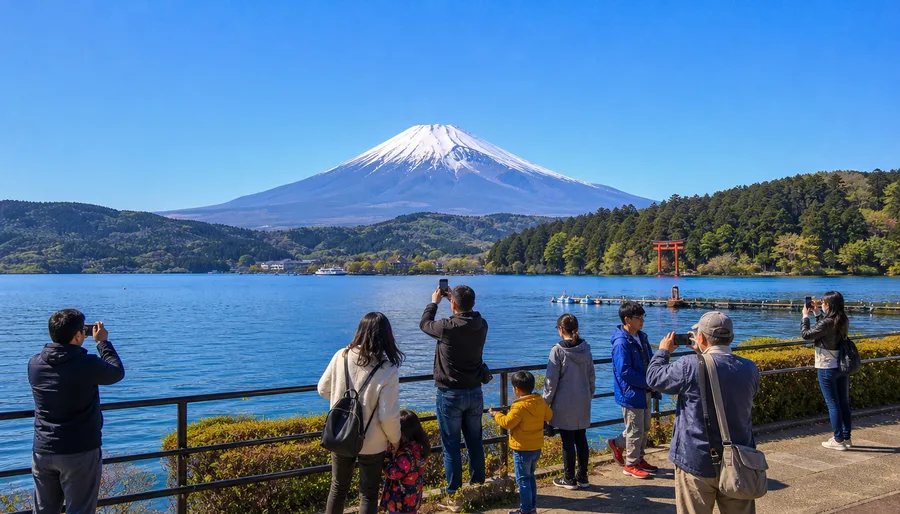
Here is the truth nobody puts in glossy tour pamphlets: Fuji is notoriously shy. You can book an expensive mt fuji and hakone tour from tokyo weeks ahead, drive two hours into Yamanashi, and spend the day staring into a thick gray wall of cloud. The mountain creates its own localized weather patterns.
Winter brings the highest visibility rates. Between December and February, dry cold fronts sweep the region, giving you crisp blue skies roughly 75% of the month. Spring is hit or miss with morning clarity that often dissolves into haze by noon. Summer is the worst time for Fuji visibility; humidity and afternoon rainstorms frequently swallow the peak completely for days at a time.
- Check webcam feeds: consult live Kawaguchiko webcams at 6:00 AM before boarding your train out of Tokyo.
- Pack light layers: the 5th Station is roughly 10 degrees Celsius colder than downtown Tokyo on any given day.
- Prioritize morning viewing: if you build an unguided loop, always head to your Fuji vantage points first before afternoon clouds roll in.
- Bring emergency cash: small local noodle shops and bus stops in Hakone frequently reject foreign credit cards and mobile pay.
Even if the mountain hides behind a blanket of white, Hakone saves the day. The sulfur vents at Owakudani, the outdoor art installations at the Hakone Open-Air Museum, and the hot spring footbaths give you a rich cultural experience that does not rely strictly on clear skies.
Frequently Asked Questions about day trip from tokyo to mt fuji and hakone
Is it better to visit Fuji or Hakone if I only have time for one?
If you want stunning nature walks, modern art, and traditional hot springs, pick Hakone. If your lifelong dream is to stand on the slopes of the volcano or photograph it towering over lakes and pagodas, choose the Fuji Five Lakes instead.
How bad is the traffic returning from Hakone to Tokyo?
On Sunday afternoons and national holiday weekends, the Tomei Expressway turns into a parking lot. A coach ride that takes 90 minutes in the morning can easily stretch to three and a half hours on the way back.
Can I ride the bullet train directly to Hakone?
The Tokaido Shinkansen stops at Odawara Station, which sits right at the entrance of the Hakone region. From Odawara, you must transfer to the local Hakone Tozan Railway to head into the mountains.
Are the black eggs in Owakudani safe to eat?
They are completely safe. They are regular chicken eggs boiled in mineral-rich volcanic water, which reacts with the eggshells to make them black. Inside, they taste like normal, perfectly hard-boiled eggs.
Quick Reference
- DIY travel requires 4+ separate transit connections
- Best viewing weather runs December through February
- Shinkansen stops at Odawara, not inside Hakone
- 5th Station sits at an altitude of 2,305 meters
Book your mt fuji from tokyo experience:
Is It Worth Cramming Both In?
Pairing both icons into a single sunup-to-sundown sprint is demanding, but it offers one of the most action-packed travel days anywhere in Asia. If you have only five or six days in Japan and refuse to leave without seeing both the majestic peak and the geothermal valleys, jumping on a tour makes absolute sense. You bypass the brain damage of mountain bus schedules and let a driver handle the highway. If your schedule allows any slack at all, though, spend a night at a Hakone ryokan, soak in an onsen under the stars, and let the volcano reveal itself at its own leisurely pace.
Read more about mt fuji from tokyo.