Climbing Mt Fuji and Visiting the 5th Station from Tokyo
Standing at Shinjuku Station at dawn with hiking poles strapped to your pack feels ridiculous. Commuters in crisp navy suits glide past on their way to quiet desks, while you smell faintly of sunscreen and waterproof spray. It hits you right away that climbing mt fuji from tokyo is both wildly accessible and faintly absurd. You can eat breakfast in a noisy ramen shop in Shibuya and find yourself above the timberline before your afternoon coffee wears off.
The iconic volcano dominates the skyline on crisp winter days, but summer is when people actually tackle the cinder slopes. Some travelers come just to poke around the shrine and gift stalls at the tree line, which sits halfway up the sky. Others want the brutal, dusty overnight push to the crater rim to see the sun break over the Pacific. Whether you plan to stroll for forty minutes or hike for twelve hours, navigating the logistics requires more planning than most first-timers expect.
Book your mt fuji from tokyo experience:
How to Get from Tokyo to Mt Fuji 5th Station
Getting out of the city is simple if you plan ahead. The most direct option is the seasonal highway bus from Tokyo to Mt Fuji, which departs straight from the Busta Shinjuku bus terminal and drops you off right in front of the gift shops at the Fuji Subaru Line 5th Station. The ride takes about two and a half hours under ideal conditions, though weekend traffic on the Chuo Expressway can easily stretch that past three hours. A one-way ticket costs around 3,800 yen. You need to book your seat weeks in advance during July and August, or you will end up stranded on the pavement watching loaded buses pull away.
If you prefer rails, you can assemble a route using the train from Tokyo to Mt Fuji. Take the JR Chuo Line from Shinjuku out to Otsuki Station, then transfer to the private Fujikyu Railway down to Kawaguchiko Station. Limited express trains like the Fuji Excursion run direct without the Otsuki transfer, but seats sell out fast. Once you arrive at Kawaguchiko, you must queue for a local mountain shuttle bus that crawls up the winding toll road. Total travel time usually hovers around three hours, and the combined fare reaches roughly 5,200 yen.
| Route Option | Travel Time | Approximate Cost | Transfers | Best For |
|---|---|---|---|---|
| Direct Highway Bus (Shinjuku) | 2.5 to 3 hours | 3,800 yen | 0 | Climbers with heavy gear |
| Fuji Excursion Train + Shuttle | 2.5 to 3 hours | 5,200 yen | 1 (at Kawaguchiko) | JR Pass holders, avoiding highway jams |
| Standard JR Chuo + Local Train + Shuttle | 3.5 to 4 hours | 4,100 yen | 2 (Otsuki and Kawaguchiko) | Budget travelers without reservations |
Deciding how to get from Tokyo to Mt Fuji 5th station really comes down to your tolerance for transfers. The direct bus from Tokyo to Mt Fuji 5th station lets you sleep the entire way, which is a blessing if you plan to walk up a volcano through the night. The train is more reliable during holiday weekends when expressway bottlenecks turn the highway into an asphalt parking lot.
Note: Yamanashi Prefecture enforces a strict entry gate system on the Yoshida Trail. Climbers passing above the 5th Station between 4:00 PM and 3:00 AM must show a confirmed mountain hut reservation or they will be turned back at the gate.
Visiting Mt Fuji 5th Station from Tokyo as a Day Trip
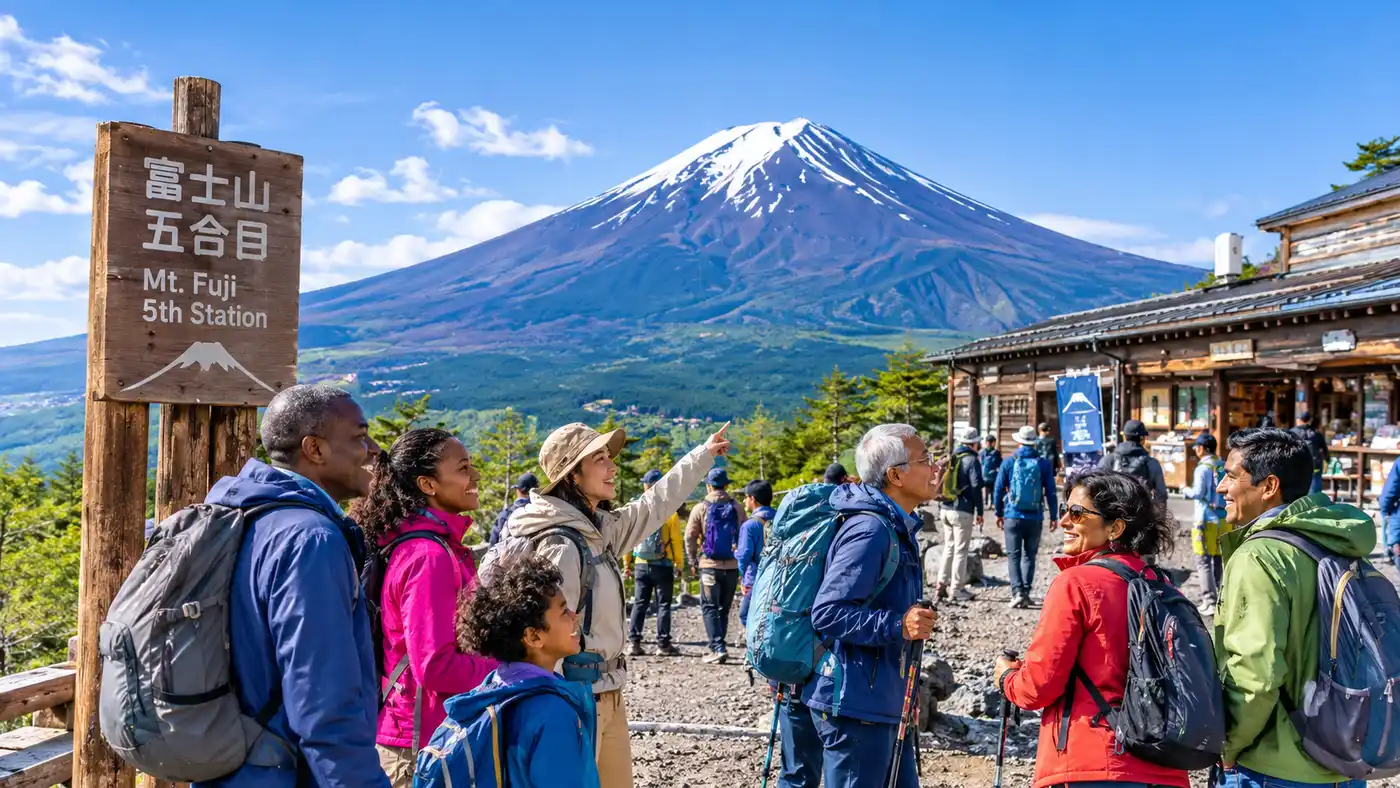
Not everyone wants to punish their knees on loose volcanic gravel. Making a day trip to Mt Fuji 5th station from Tokyo gives you the mountain atmosphere without the physical toll. The Subaru Line station sits at 2,305 meters above sea level, perched right at the boundary where dwarf pine trees surrender to barren black rock.
The complex feels like a high-altitude tourist village. Tour buses idle in massive rows, tour leaders wave colored flags, and the smell of freshly baked melon bread drifts out from the bakery on the second floor of the main lodge. These buns are shaped like miniature volcanoes and dusted with cocoa powder. They taste fantastic with a hot can of Boss coffee bought from a machine outside.
Walk past the crowded gift shops and you will find Komitake Shrine. Shinto worshipers have visited this exact spot for over a thousand years. The red torii gate frames the clouds below, and for zero physical effort, you get sweeping views across the Fuji Five Lakes basin. On foggy days, the clouds roll directly through the plaza, dropping the temperature by fifteen degrees in five minutes. Bring a fleece jacket even if Shinjuku was boiling when you left your hotel.
If you want to stretch your legs without climbing to the summit, head to the Ochudo Trail. This historic path wraps horizontally around the belly of the mountain. Most bus tourists completely ignore it, so you can walk through stunted larch trees and strange moss formations in relative silence for forty minutes before looping back to catch your return bus.
How to Climb Mt Fuji from Tokyo on the Yoshida Trail
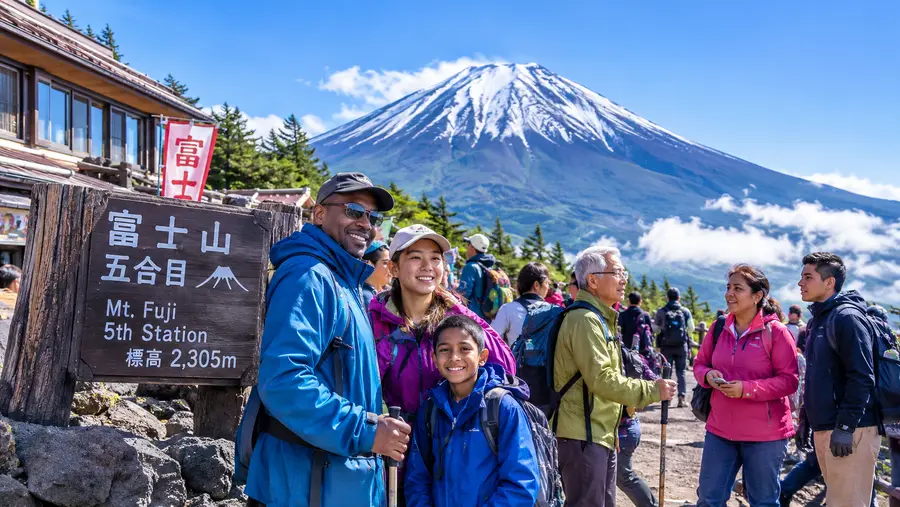
Learning how to climb Mt Fuji from Tokyo usually starts with studying the Yoshida Trail. It is the most popular route by a wide margin, hosting over sixty percent of all hikers on the mountain. The trailhead begins immediately behind the commercial lodges at the 5th Station, luring you in with wide, gentle paths made of packed earth.
Pro tip: Do not start walking the moment your bus arrives. Spend at least an hour sitting at the 5th Station eating a snack, which gives your lungs time to adjust to the thin air at 2,305 meters.
That gentle walking does not last long. Soon the earth turns into steep switchbacks made of red lava scree. By the time you reach the 7th Station, you are clambering up raw rock faces using both hands, your boots kicking up fine basalt dust that coats your socks. The physical effort is steady, grinding, and relentless.
- Stage 1 (5th to 7th Station): broad dirt paths that turn into steep zigzags; takes roughly two hours of steady walking through thinning scrub.
- Stage 2 (7th to 8th Station): rugged scrambling over volcanic basalt steps, chains, and rocky ledges; allow two to three hours here.
- Stage 3 (8th Station to Summit): steep, oxygen-depleted switchbacks lined with white wooden torii gates; expect two hours of slow, crowded steps.
- The Descent: a separate, bone-jarring downhill track made of loose gray ash that takes three exhausting hours to slide down.
Most hikers aim to reach a mountain hut by early evening. You unpack your damp clothes, eat a fast dinner of lukewarm curry rice, and crawl into a tight bunk space sleeping shoulder-to-shoulder with total strangers. Around 1:30 AM, rustling plastic bags and headlamps wake the hut. Everyone files into the cold air to join the glowing caterpillar of lights inching toward the rim for goraiko, the sunrise.
Book your mt fuji from tokyo experience:
Choosing an Mt Fuji Hiking Tour from Tokyo or Going Solo
Planning the logistics on your own can feel overwhelming, which makes an Mt Fuji hiking tour from Tokyo an appealing alternative for solo travelers. Tour companies handle the highway transport, supply bilingual mountain guides, and lock down your mountain hut reservation months ahead of time. Given how quickly hut bookings sell out on Japanese booking portals, securing that bed through an organized tour often saves your entire trip.
Guided tours also eliminate the stress of gear logistics. Several operators in Tokyo partner with outdoor rental shops. You can pick up a full package - rain jacket, boots, fleece, trekking poles, and headlamp - right near Shinjuku Station in the morning, wear it up the volcano, and hand it back dirty when the return bus drops you off the following evening. You never have to haul muddy boots through the rest of your vacation.
Going without a guide gives you freedom. You set your own pace, stop when your calves cramp, and skip the awkward group dynamics that happen when someone in a tour group succumbs to altitude sickness. If you are an experienced hillwalker who speaks a little basic Japanese and books your hut the day reservations open in the spring, a solo climb is simple to manage. If you have never hiked above 2,000 meters or dislike managing multi-step logistics, book a guided trip.
Trail Rules and Packing for the Ascent
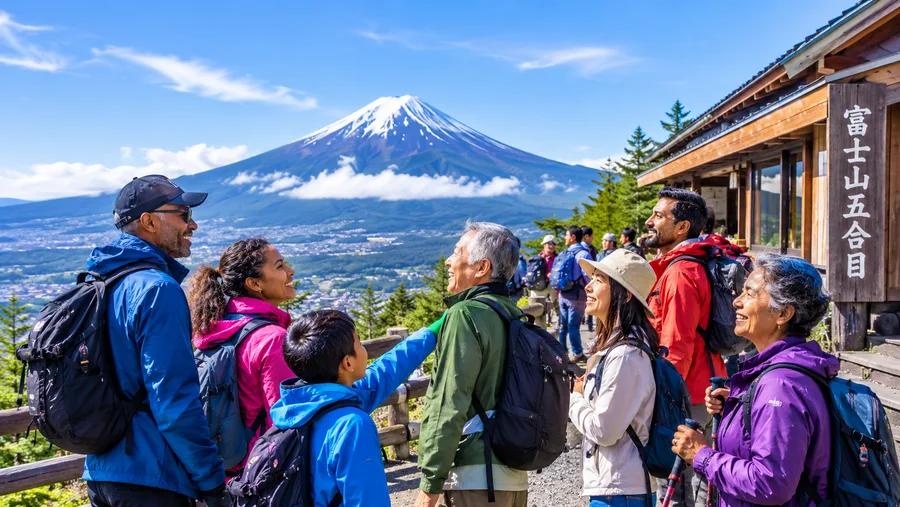
The days of casual, unregulated climbing on Fuji are over. Yamanashi Prefecture now caps daily traffic on the Yoshida Trail at 4,000 climbers and charges a mandatory 2,000 yen entry fee at the 5th Station checkpoint. They instituted these rules because unprepared tourists were trying to "bullet climb" - hiking all night without sleeping - leading to hypothermia and dangerous trail jams.
The weather on the summit has broken many spirits. Down in Tokyo, people are sweating through linen shirts in 35-degree heat. Up on the crater rim at 3,776 meters, the pre-dawn temperature routinely hovers near freezing, accompanied by brutal winds that slice straight through cotton hoodies. You must dress for two entirely different climates on the same day.
- Layered clothing: a moisture-wicking base layer, a warm fleece or packable down jacket, and a windproof waterproof outer shell.
- Sturdy footwear: high-top hiking boots that keep loose volcanic gravel from sliding down into your wool socks.
- Illumination: an LED headlamp with spare batteries; your phone flashlight is useless when scrambling over rocks in the dark.
- Cash reserve: at least thirty 100-yen coins, because mountain hut toilets cost 200 to 300 yen per visit and card readers do not exist on the ridge.
- Hydration and snacks: two liters of water to start, plus salty snacks to replace what you sweat out on the lower switchbacks.
Pack a sturdy plastic grocery bag in your rucksack. There are zero rubbish bins on Mount Fuji. Every scrap of plastic, every banana peel, and every used plaster you generate must travel back down to the 5th Station in your own bag. The mountain stays clean only because visitors carry their own waste back to the city.
Frequently Asked Questions about climbing mt fuji from tokyo
Can I do a day hike to the summit and back from Tokyo?
Physically, fit trail runners do it, but authorities strongly discourage it for normal visitors. Catching the first bus from Shinjuku gets you to the trailhead around 9:00 AM, leaving you barely enough daylight to climb 1,500 vertical meters and descend before the last bus back to Tokyo departs around 6:00 PM. Rushing this ascent also dramatically spikes your risk of acute mountain sickness.
When is the official climbing season for Mt Fuji?
The Yoshida Trail on the Yamanashi side is officially open from July 1 to September 10 every year. Outside these dates, mountain huts are shuttered, public aid stations are closed, chemical toilets are locked, and the upper trails are dangerous due to snow and rockfalls.
Is the 5th Station open if I do not want to climb?
Yes, the Fuji Subaru Line 5th Station is accessible for casual sightseeing almost year-round, weather permitting. Even during the winter, the toll road stays open unless heavy snowfall or ice blocks the pavement, making it a great day excursion if you just want mountain views.
What happens if I get altitude sickness on the trail?
The only cure for altitude sickness is descending. If you develop a pounding headache, nausea, or dizziness that rest and water do not fix, turn around immediately. Walk down to the 7th or 5th Station where the air pressure is higher; resting in the lower atmosphere usually resolves symptoms within an hour.
Quick Reference
- Climbing season runs July 1 to September 10 only
- Subaru Line 5th Station sits at 2,305m elevation
- Direct Shinjuku highway bus takes 2.5 hours (3,800 yen)
- Yamanashi trail fee is 2,000 yen with a 4,000 daily cap
- Summit temperatures before dawn drop near freezing
Book your mt fuji from tokyo experience:
My Take on the Climb
I think people often arrive expecting a serene, spiritual walk through ancient pines and end up shocked by the reality of the Yoshida Trail. It is a volcanic quarry, steep and harsh, shared with thousands of strangers shuffling along in the dark. Your calves will burn, your eyes will sting from red dust, and you will probably hate the taste of lukewarm curry by 8:00 PM. Yet, when the clouds split open at dawn and the morning light casts the mountain's giant triangular shadow across the misty plains below, all the misery evaporates. If you have the stamina and an open weekend in Tokyo during the summer, lace up your boots and go.
Read more about mt fuji from tokyo.