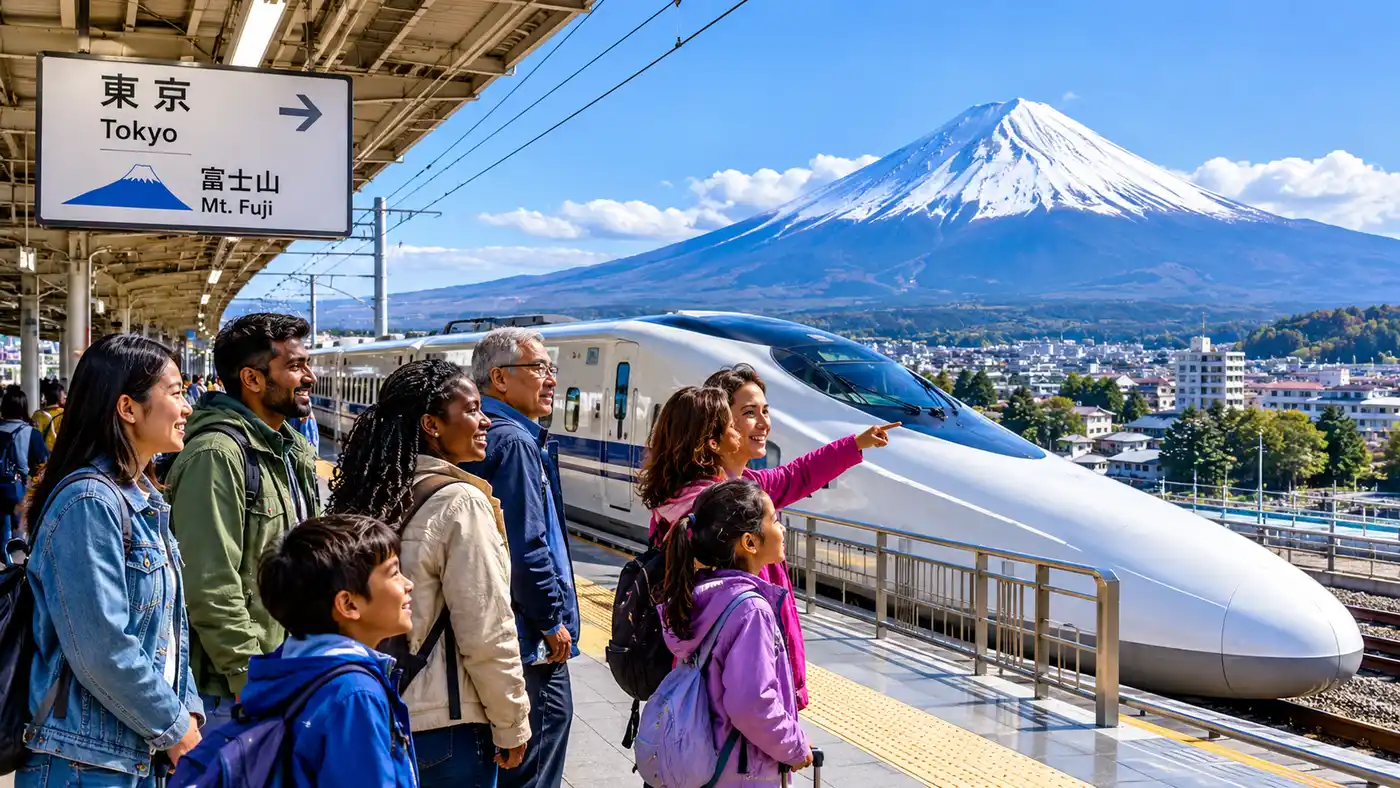
Taking the Train from Tokyo to Mt Fuji
Boarding the morning train from tokyo to mt fuji is one of those classic Japanese travel rituals that sounds effortless until you actually open a rail map. Tokyo has dozens of rail hubs, multiple overlapping transit companies, and an overwhelming web of colorful lines. You sit in your hotel room looking at route planners, trying to figure out why some routes take two hours while others spit you out at an industrial bus stop south of the peak. I remember standing under the departures board at Shinjuku Station during my first attempt, squinting at the glowing green kanji while thousands of commuters brushed past my shoulders, wondering if I had bought a ticket to the right prefecture.
Getting it right comes down to understanding one basic geography trick that guidebooks rarely emphasize. Mount Fuji does not have a single train station sitting on its crater rim. Most travelers want Lake Kawaguchiko on the northern flank, while others aim for the southern foothills near Shizuoka. Once you pick your destination, choosing the right rail route becomes simple, affordable, and surprisingly fast.
Book your mt fuji from tokyo experience:
Can You Take a Bullet Train from Tokyo to Mt Fuji?
This is the first question almost every visitor asks. The short answer is yes, but with a massive catch that catches dozens of tourists off guard every week. You can certainly ride the Tokaido Shinkansen heading west toward Kyoto or Osaka. If you book a seat on the right side of the carriage, you get a breathtaking view of the mountain sliding past the window around forty-five minutes after pulling out of Tokyo Station. We break down the exact seat numbers and timing in our guide on how to see Mt Fuji from the Shinkansen.
The problem is where the train stops.
If you take the bullet train from tokyo to mt fuji, the closest rail stop is Shin-Fuji Station. Shin-Fuji sits down near Suruga Bay. There are no connecting trains from Shin-Fuji up into the Five Lakes region. When you step off the platform, you find a taxi rank, a concrete plaza, and a line of local buses. Getting from Tokyo to Mt Fuji by shinkansen means you must transfer to an hourly highway bus to reach Kawaguchiko, which adds another two hours on the road. It rarely makes sense for travelers heading to the classic postcard sights.
The math does not favor it either. The bullet train ticket from tokyo to mt fuji down to Shin-Fuji costs roughly 5,170 yen for an unreserved seat. Add another 2,500 yen for the regional bus to Kawaguchiko, and the total cost of bullet train from tokyo to mt fuji easily tops 7,600 yen each way. Bullet train from tokyo to mt fuji how long? The train leg takes only 48 minutes, but waiting for the bus and crawling through mountain passes stretches the trip past three hours. Unless your hotel sits directly on the southern coast, skip the bullet train.
Note: Shin-Fuji Station does not connect to any conventional train lines. If you accidentally get off the Shinkansen there, your only way out is a local bus or an expensive taxi ride.
The Direct Train from Tokyo to Mt Fuji: The Fuji Excursion
If you want a painless ride without switching platforms with heavy luggage, look for the Fuji Excursion. This is an express train from tokyo to mt fuji operated jointly by JR East and the private Fujikyu Railway. It leaves Shinjuku Station in the morning, runs along the scenic Chuo Line into the Yamanashi highlands, and transitions directly onto the local mountain tracks without forcing you to change seats.
It takes you straight to Kawaguchiko Station in 1 hour and 53 minutes. The train stops at Otsuki, Mt. Fuji Station, and Fuji-Q Highland along the way. You step aboard at Shinjuku, find your seat, pull out a carton of convenience store egg sandwiches, and wake up staring straight at the snowy peak towering over the station roof.
Demand for these direct seats is enormous. JR runs only three to four direct round trips on typical weekdays, adding an extra departure or two on busy summer weekends. Every car requires a seat reservation. There are no unreserved coaches on the Fuji Excursion. Above every seat, small LED lights glow red, yellow, or green to indicate whether the spot is booked, upcoming, or occupied. If you try to board with just an IC card like Suica or Pasmo, the conductor will charge you a hefty penalty surcharge right in the aisle.
Pro tip: Fuji Excursion tickets go on sale exactly 30 days in advance at 10:00 AM Japan Standard Time through the JR East Train Reservation website, and morning weekend departures often sell out within minutes.
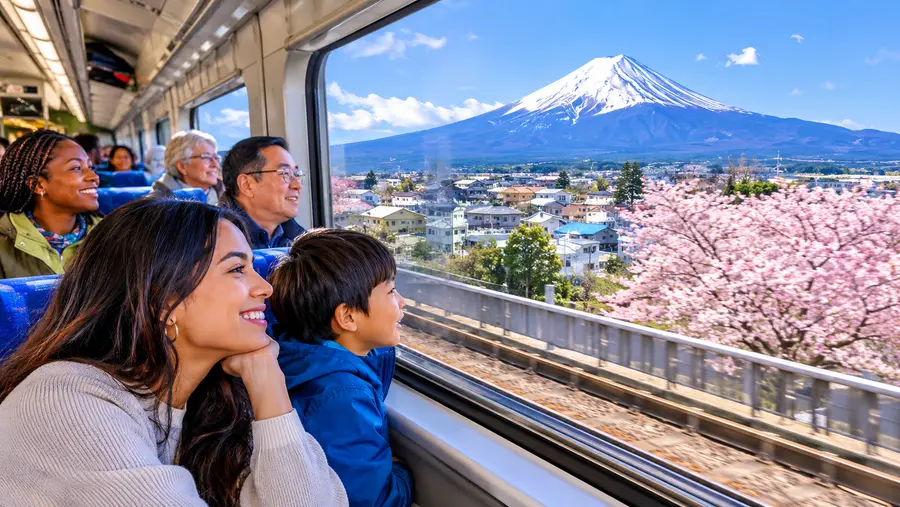
JR Pass from Tokyo to Mt Fuji and Ticket Costs
Using a nationwide Japan Rail Pass on this route requires paying close attention to the tracks underneath the wheels. A common question among backpackers is simply: can I use JR Pass from tokyo to mt fuji? Yes, but it only covers part of the steel.
The rail line from Shinjuku out to Otsuki belongs to JR East. That portion is fully covered by your pass. From Otsuki down to Mt. Fuji Station and Kawaguchiko, the tracks belong to the private Fujikyuko Line. Because it is a private railway, the nationwide pass does not cover it. When you arrive at Kawaguchiko or pass through the fare gates, staff will ask to see your rail pass and charge you a supplement.
- Fujikyu track surcharge: 1,170 yen for basic fare between Otsuki and Kawaguchiko.
- Limited express seat fee: 600 yen extra if you rode the direct Fuji Excursion train.
- Tokyo Wide Pass exception: fully covered with zero extra fees since this specific regional pass includes Fujikyu tracks.
- Total one-way fare without passes: roughly 4,130 yen for an adult reserved seat from Shinjuku.
If you want to keep the cost of train from tokyo to mt fuji as low as possible, you can skip the limited express altogether. Regular JR Chuo Line commuter trains run west out of Shinjuku toward Takao and Otsuki constantly throughout the day. You catch a Chuo Line Special Rapid, switch to a local train at Takao, ride to Otsuki, and then buy a ticket for the local Fujikyu commuter train. Total travel time from tokyo to mt fuji by train stretches to about two hours and forty minutes using this method. The train fare from tokyo to mt fuji drops down to roughly 2,510 yen each way.
Local trains lack assigned seats, overhead luggage racks are small, and school kids cram into the aisles in the afternoon. Still, you save money, and you do not need to stress over sold-out booking windows.
Book your mt fuji from tokyo experience:
Comparing Your Train Options
Sorting out what train to take from tokyo to mt fuji depends on your budget, whether you hold a rail pass, and how much you hate changing platforms. The table below outlines the three main rail strategies departing from central Tokyo hubs.
| Route Option | Average Travel Time | One-Way Cost | Transfers | JR Pass Coverage |
|---|---|---|---|---|
| Fuji Excursion (Direct Limited Express) | 1 hr 53 min | ~4,130 yen | 0 | Partial (requires ~1,770 yen extra fee) |
| JR Chuo Rapid + Local Fujikyu Line | 2 hr 45 min | ~2,510 yen | 2 (Takao, Otsuki) | Partial (requires ~1,170 yen local fee) |
| Tokaido Shinkansen (to Shin-Fuji) + Bus | 2 hr 40 min | ~7,670 yen | 1 (train to bus) | Train covered; bus out-of-pocket (~2,500 yen) |
Looking at the real numbers makes the decision obvious for most people. The direct limited express beats everything else on comfort. The commuter route saves cash if you travel on a tight shoestring. The Shinkansen route only makes practical sense if you plan to sleep in Fujinomiya, visit the southern tea plantations, or continue straight toward Kyoto after catching a brief glimpse of the volcano through the clouds.
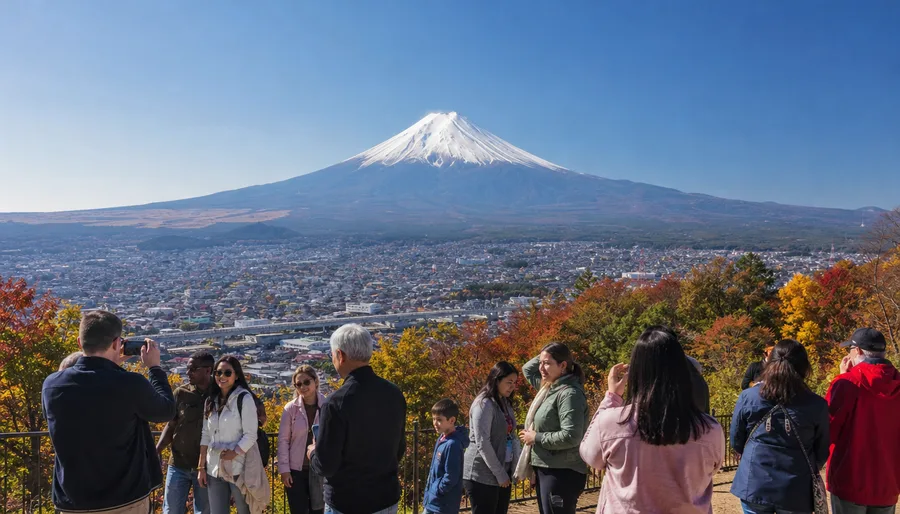
Planning a Day Trip from Tokyo to Mt Fuji by Train
A successful Mt Fuji day trip from Tokyo requires an early start. The mountain creates its own microclimate. Cool air rolling down the forest slopes meets moist valley air by late morning, generating thick layers of cumulus clouds that often wrap around the summit by 11:00 AM. Clear mornings frequently turn into completely obscured afternoons, even in winter.
Aim to board the earliest train out of Shinjuku. The 7:30 AM departure gets you to Kawaguchiko right around 9:25 AM, giving you a clean window of blue skies before the tour buses roll in from the highway. When you arrive at Kawaguchiko Station, head directly to the left side of the terminal building to store your day packs in the luggage lockers, or hop straight onto the Red Line tourist retro bus heading along the northern lake shore.
To keep your day running smoothly, structure your movements logically:
- Target morning viewpoints first: visit Chureito Pagoda or Oishi Park before noon to beat the summit cloud cover.
- Watch the return timetable: evening Fuji Excursion trains back to Shinjuku fill up quickly, so book your return seat before leaving Tokyo.
- Keep an IC card charged: make sure your Suica or Pasmo has at least 3,000 yen balance for local retro buses and station snacks.
- Check weather webcams at dawn: check live feeds from Lake Kawaguchiko before boarding in Shinjuku to ensure the peak is actually visible.
I find the late afternoon train ride back toward the city incredibly peaceful. The train rocks gently along the valley curves through Otsuki, the daylight fades behind dark cedar ridges, and the city lights slowly flare up again as the Chuo Line barrels back into western Tokyo.
Frequently Asked Questions about train from tokyo to mt fuji
Can you take bullet train from tokyo to mt fuji directly?
No, there is no direct bullet train service to Mount Fuji or Lake Kawaguchiko. The Tokaido Shinkansen passes south of the mountain, stopping at Shin-Fuji Station, where you must transfer to a highway bus to reach the Five Lakes region.
How long from tokyo to mt fuji by train?
The fastest route is the direct Fuji Excursion limited express train, which takes 1 hour and 53 minutes from Shinjuku Station to Kawaguchiko Station. Local commuter rail combinations take between 2.5 and 3 hours.
How much is train from tokyo to mt fuji?
A reserved seat on the direct Fuji Excursion costs approximately 4,130 yen each way. If you choose regular local commuter trains with transfers at Takao and Otsuki, the one-way fare drops to roughly 2,510 yen.
How to get to mt fuji from tokyo JR pass style?
Board the JR Chuo Line or Fuji Excursion at Shinjuku Station using your pass. Your pass covers the journey as far as Otsuki Station. From Otsuki to Kawaguchiko, you will pay a separate fare of 1,170 to 1,770 yen on board or at the gate because the tracks belong to the private Fujikyu Railway.
Quick Reference
- Fastest train: Fuji Excursion (1h 53m from Shinjuku)
- Main destination station: Kawaguchiko Station
- Direct train cost: ~4,130 yen one way
- JR Pass coverage: Valid only to Otsuki Station
Book your mt fuji from tokyo experience:
Before You Step on the Platform
Getting to Japan's most sacred peak by rail is simple once you ditch the idea of riding a bullet train to the lakes. Reserve your seats on the morning Fuji Excursion as early as the booking window allows, keep a light jacket in your pack for the cooler mountain air, and sit on the left side of the train leaving Shinjuku for the best mountain angles as you approach Otsuki. If seats are sold out, board the regular Chuo Line commuter train without hesitation. The extra transfer at Otsuki is painless, the mountain looks just as tall when you step off at Kawaguchiko, and the quiet rhythm of the regional train sets the perfect tone for a day in the highlands.
Read more about mt fuji from tokyo.