Mt Fuji Day Trip from Tokyo: DIY Planning and Itinerary
I woke up at 5:45 AM, grabbed two lukewarm canned coffees and an egg salad sandwich from the FamilyMart across from Shinjuku Station, and caught the first limited express train out of the city. Pulling off a smooth mt fuji day trip from tokyo without a guide is mostly about timing and accepting that the mountain does whatever it wants. If the sky is clear, it punches straight through the horizon. If it rains, you spent three hours on transit to look at a wall of gray mist while eating hot noodles.
Can you do mt fuji in a day from tokyo? Yes, easily. Thousands of commuters and tourists do it every single week. Doing it well, on your own terms, without getting trapped in bus tour bottlenecks or stranded at a train platform because reservations booked out three weeks ago, requires some forethought. This guide lays out a realistic, step-by-step diy mt fuji from tokyo plan that gives you flexibility when the clouds roll in.
Book your mt fuji from tokyo experience:
Getting There: Trains, Buses, and the Smartest Route
The biggest decision you have to make happens before you leave your hotel. You can take a highway bus from the Shinjuku Expressway Bus Terminal (Busta Shinjuku) directly to Kawaguchiko Station, or you can take the train. The highway bus costs about 2,200 yen each way and drops you right by the lake in roughly an hour and 45 minutes, provided the Chuo Expressway does not turn into a parking lot. On Saturday mornings or during national holidays, that bus ride can balloon past three hours. I learned that the hard way during Golden Week a few years back, watching cyclists pass our coach on the side access roads.
Because traffic is a wild card, the railway is usually your safest bet for a tight mt fuji one day trip from tokyo. The JR Fuji Excursion limited express runs directly from Shinjuku to Kawaguchiko without any transfers in about an hour and 55 minutes. You sit down, open your breakfast, and get off in Yamanashi Prefecture. Tickets cost roughly 4,130 yen each way including the reserved seat fee. Seats open up exactly 30 days in advance on the JR East reservation site at 10:00 AM Japan time, and morning weekend slots disappear within minutes. If you want a deeper look at the railway routing, check out our guide to taking the train from Tokyo to Mt Fuji.
Pro tip: If the direct Fuji Excursion train is sold out, book the JR Chuo Line Limited Express (Azusa or Kaiji) to Otsuki Station instead, then switch to the local Fujikyu Railway line using your Suica card.
When you take the transfer option at Otsuki, you only add about 15 minutes to your total transit time. The local Fujikyu trains have wooden floors, quirky mountain-themed seats, and huge windows that frame the peak as you climb into the foothills. Plus, it gives you the flexibility to get off at Shimoyoshida Station first rather than going all the way to Lake Kawaguchiko.
| Option | One-Way Cost | Travel Time | Best For |
|---|---|---|---|
| JR Fuji Excursion (Direct Train) | ~4,130 yen | 1 hr 55 min | Zero transfers, speed, fixed schedules |
| JR Azusa + Fujikyu Local | ~3,700 yen | 2 hr 10 min | Last-minute planners when direct trains sell out |
| Highway Bus (from Shinjuku) | ~2,200 yen | 1 hr 45 min to 3 hr+ | Budget travelers on weekday mornings |
Best Time to Visit Mt Fuji from Tokyo for Clear Views
Fuji is notoriously shy. You can stand five miles away from an active volcano that reaches 3,776 meters into the sky and have absolutely no idea it exists because a dense thermal cloud bank settled around its waist. If seeing the snowcap is non-negotiable, winter is your season. Between December and February, the cold, dry air over central Honshu gives you crisp morning visibility about 75% of the time. You will freeze your fingers off at the viewpoints, but the volcano will look razor-sharp against the cobalt sky.
Summer is a gamble. Warm ground air creates updrafts as the morning heats up, and by 10:00 AM between June and August, the cone is usually buried behind cotton-ball clouds. If you attempt a day trip from tokyo to see mt fuji in mid-summer, you need to catch the 6:45 AM or 7:30 AM train. Getting to the lakeshore before the thermal clouds boil up is the only reliable way to catch an unobstructed view.
- Winter (December to February): Clearest skies of the year, freezing morning temperatures, and heavy snow caps on the peak.
- Spring (Late March to April): Cherry blossoms around Lake Kawaguchiko, moderate crowds, and hazy afternoon visibility that requires early arrivals.
- Early Autumn (October to November): Vibrant red momiji maple leaves along the northern lake shore with cooler air and stable morning high-pressure systems.
Before leaving your Tokyo hotel bed, check the live streaming webcams maintained by the Yamanashi prefecture government. If the camera at Oishi Park shows complete fog at 6:00 AM, pivot. Go to Kamakura or Nikko instead, because the weather rarely clears up later in the afternoon.
The Classic Day Trip to Mt Fuji from Tokyo Itinerary
This self-guided daytrip from tokyo to mt fuji focuses on the Fuji Five Lakes area, specifically Lake Kawaguchiko and the town of Fujiyoshida. It balances the famous viewpoints with time to actually sit down and enjoy lunch without running frantically between bus stops. For a list of specific vantage spots around the region, browse our breakdown of the best places to view Mt Fuji from Tokyo and beyond.
07:30 AM – Shinjuku to Shimoyoshida Station. Board the morning Fuji Excursion train. Instead of riding all the way to Kawaguchiko Station, get off three stops early at Shimoyoshida. Doing this saves you back-tracking time later in the day. From the station exit, follow the stamped red arrows on the asphalt sidewalk toward Arakurayama Sengen Park.
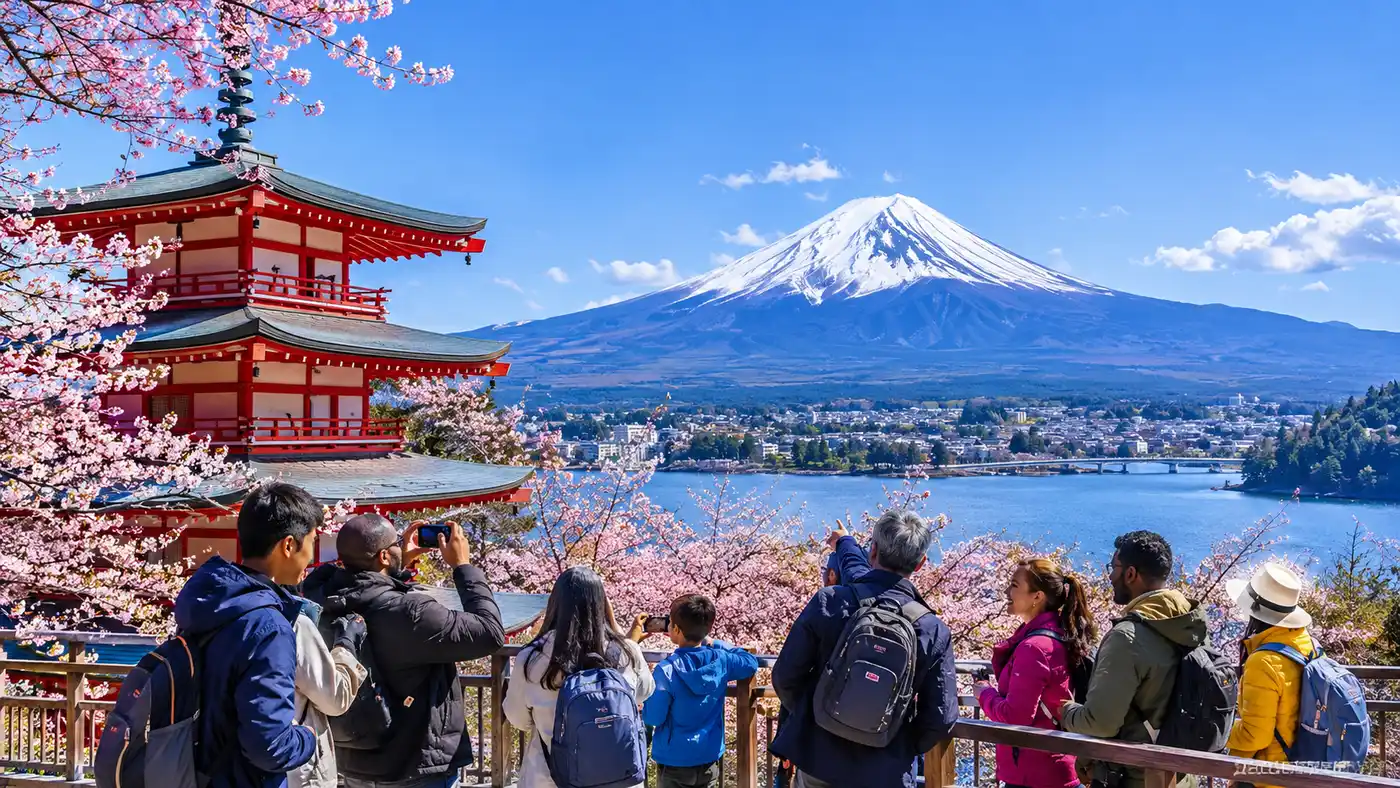
09:30 AM – The Chureito Pagoda Climb. You have to climb 398 concrete steps up the hillside to reach the vermilion five-story pagoda. It burns your calves, especially if you carry a heavy camera backpack. When you reach the viewing deck behind the pagoda, you get the postcard shot: the red eaves in the lower left corner, cherry or pine trees in the center, and the massive snowy triangle of Fuji filling the background. Spend an hour here soaking in the quiet before the tour buses begin pulling into the lower parking lot around 10:30 AM.
Note: Tripods are strictly forbidden on the observation deck behind Chureito Pagoda due to space constraints and safety rules, so leave heavy camera gear in your daypack.
11:30 AM – Honcho Street and Local Lunch. Walk down the hill toward the old textile quarter of Fujiyoshida. Honcho Street features that famous retro view where telephone wires, Japanese store signs, and small delivery trucks frame the mountain looming directly over the roadway. Be careful of street traffic here; local police now patrol this intersection to keep tourists off the roadbed. Stop in a small eatery for Yoshida Udon, a local specialty featuring thick, chewy noodles served in a savory miso-and-soy broth topped with boiled cabbage and spicy suridane paste.
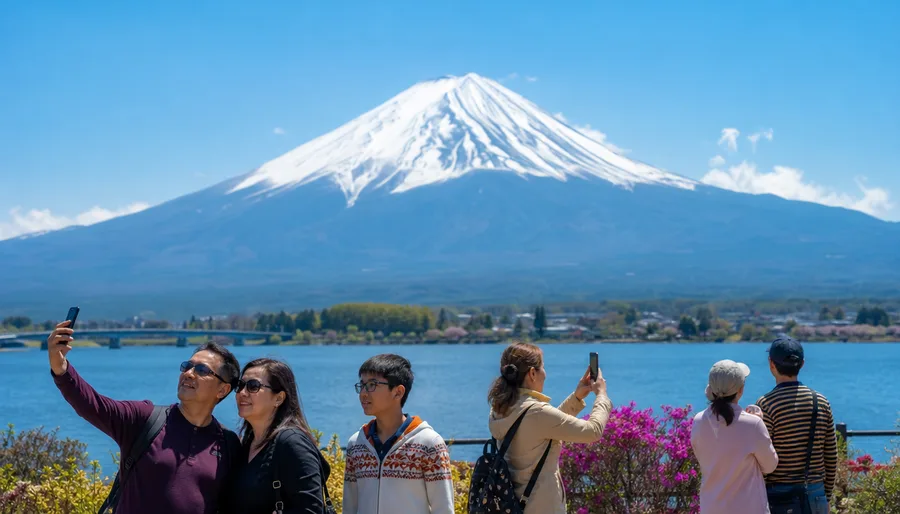
01:15 PM – Local Train to Kawaguchiko and Oishi Park. Walk back to Shimoyoshida Station and take the local train 15 minutes to Kawaguchiko Station. Outside the terminal, buy a ticket for the Kawaguchiko Sightseeing Bus (Red Line). Ride it all the way to the final stop at Oishi Park on the northern shore of the lake. The lake sits flat like glass in early afternoon, reflecting the south-facing slope of the mountain. You can stroll through the park's lavender bushes or kochia balls depending on the season, or grab a blueberry soft-serve cone at the terrace cafe.
04:00 PM – Lake Shore Stroll or Mt. Fuji Panoramic Ropeway. Catch the Red Line bus back toward the center of the lake. If the line is short, you can ride the Mt. Fuji Panoramic Ropeway up Mount Tenjo for an elevated vantage point over the water. Honestly, if the queue exceeds 45 minutes, skip it. Walking the lakeside promenade toward the Kawaguchiko Ohashi Bridge is far more relaxing, free of charge, and yields fantastic sunset reflections without jostling through crowds of selfie sticks.
06:00 PM – Return to Tokyo. Walk back to Kawaguchiko Station, browse the souvenir shop for Fujiyama-shaped cookies, and board your evening train or bus back to Shinjuku. You will likely be back in central Tokyo by 8:30 PM, just in time for late-night ramen.
Book your mt fuji from tokyo experience:
Alternative Stops: Beyond the Standard Tourist Trail
If you prefer skipping crowded photo spots, you can easily tweak this best one day trip to mt fuji from tokyo into an excursion that feels remote. Most day-trippers never venture beyond the eastern shore of Lake Kawaguchiko, leaving the rest of the Fuji Five Lakes relatively quiet.
Renting a bicycle right outside Kawaguchiko Station changes the entire day. Electric assist bikes cost roughly 2,000 to 3,000 yen for a full day. You can ride all the way around Lake Kawaguchiko in about three hours at an easy pace. Crossing the bridge gives you changing mountain angles that bus passengers never see through tinted windows.
- Saiko Iyashi-no-Sato Nenba: A reconstructed traditional thatched-roof farming village on the shores of Lake Saiko, about 25 minutes west by the Green Line bus. It feels like stepping into ancient Japan with Fuji towering directly in the valley opening.
- Kitaguchi Hongu Fuji Sengen Shrine: Tucked into a dense forest of ancient cedar trees in Fujiyoshida, this shrine historically marked the starting point for mountain pilgrims hiking up the northern trail. It smells of damp wood, moss, and burning incense.
- Oshino Hakkai: Eight clear spring pools fed by snowmelt filtering through underground lava layers for eighty years. It can get packed mid-day, but the clarity of the water is remarkable.
A half day trip to mt fuji from tokyo is technically doable if you only visit Chureito Pagoda and rush back on the 1:00 PM train. I generally advise against it. You spend four hours on trains for two hours on the ground, which feels frantic and leaves zero room for delays.
Practical Tips for a Self-Guided Fuji Day Trip
Pulling off a mt fuji day trip from tokyo self guided requires managing small logistics that trip up first-timers. The area relies on a mix of JR trains, private railways, and municipal loop buses, each with slightly different fare systems.
Bring cash. While Tokyo is largely cashless now, smaller noodle shops, fruit stands, and lockers around Lake Kawaguchiko still take 100-yen coins and 1,000-yen notes exclusively. If you need to store your daypack, Kawaguchiko Station has lockers behind the building that cost 500 to 800 yen, but they fill up fast by 10:00 AM.
Dress in warm layers regardless of what Tokyo's forecast says. Kawaguchiko sits at an elevation of roughly 830 meters above sea level. It is consistently 5 to 8 degrees Celsius colder than downtown Tokyo, and the wind cutting across the lake from the snowy slopes drops the temperature even further.
Keep your phone charged. You will use Google Maps, live camera portals, and train timetable apps constantly. Cold mountain air drains lithium phone batteries twice as fast as humid city air, so keep an external battery pack in your pocket.
Frequently Asked Questions about mt fuji day trip from tokyo
Is it possible to visit the 5th Station and the lakes on the same day trip?
Yes, but it feels rushed without a rental car. Local buses run from Kawaguchiko Station up to the Subaru Line 5th Station in about 50 minutes, costing 2,300 yen round-trip. Attempting both the lake viewpoints and the high mountain road in one self-guided day leaves you spending most of your daylight hours sitting inside buses.
Can I use my Japan Rail Pass for the entire journey?
The standard JR Pass covers the train journey from Tokyo up to Otsuki Station on the JR Chuo Line. The final leg between Otsuki and Kawaguchiko belongs to the private Fujikyu Railway, which costs an additional 1,170 to 1,770 yen each way depending on whether you ride a local or limited express service.
What should I do if Mt Fuji is covered in clouds when I arrive?
Pivot to cultural sites and food. The Kubota Itchiku Art Museum houses stunning landscape kimonos near Lake Kawaguchiko, and the underground ice caves at Narusawa offer an interesting look into volcanic geography. You can also relax in a hot spring day bath like Fuji Yurari with onsen pools overlooking the misty foothills.
Quick Reference
- Direct train travel time: 1 hr 55 min from Shinjuku Station
- Average one-way transit cost: 2,200 yen (bus) to 4,130 yen (train)
- Highest chance of clear views: December through February mornings
- Top self-guided hub: Kawaguchiko Station
Book your mt fuji from tokyo experience:
My Take on Doing It Alone
Booking a large commercial bus tour from central Tokyo is tempting because it removes all the thinking. But you trade freedom for convenience, spending your afternoon following a little numbered flag through souvenir shops and having exactly twenty minutes at viewpoints before the bus horn sounds. A diy mt fuji tour from tokyo gives you the freedom to linger by the water when the light turns golden, take a wrong turn down a quiet alley lined with cedar trees, or sit quietly with a hot bowl of noodles while watching the clouds scrape past the summit. Check the morning webcams, grab an early train seat, and let the mountain surprise you.
Read more about mt fuji from tokyo.