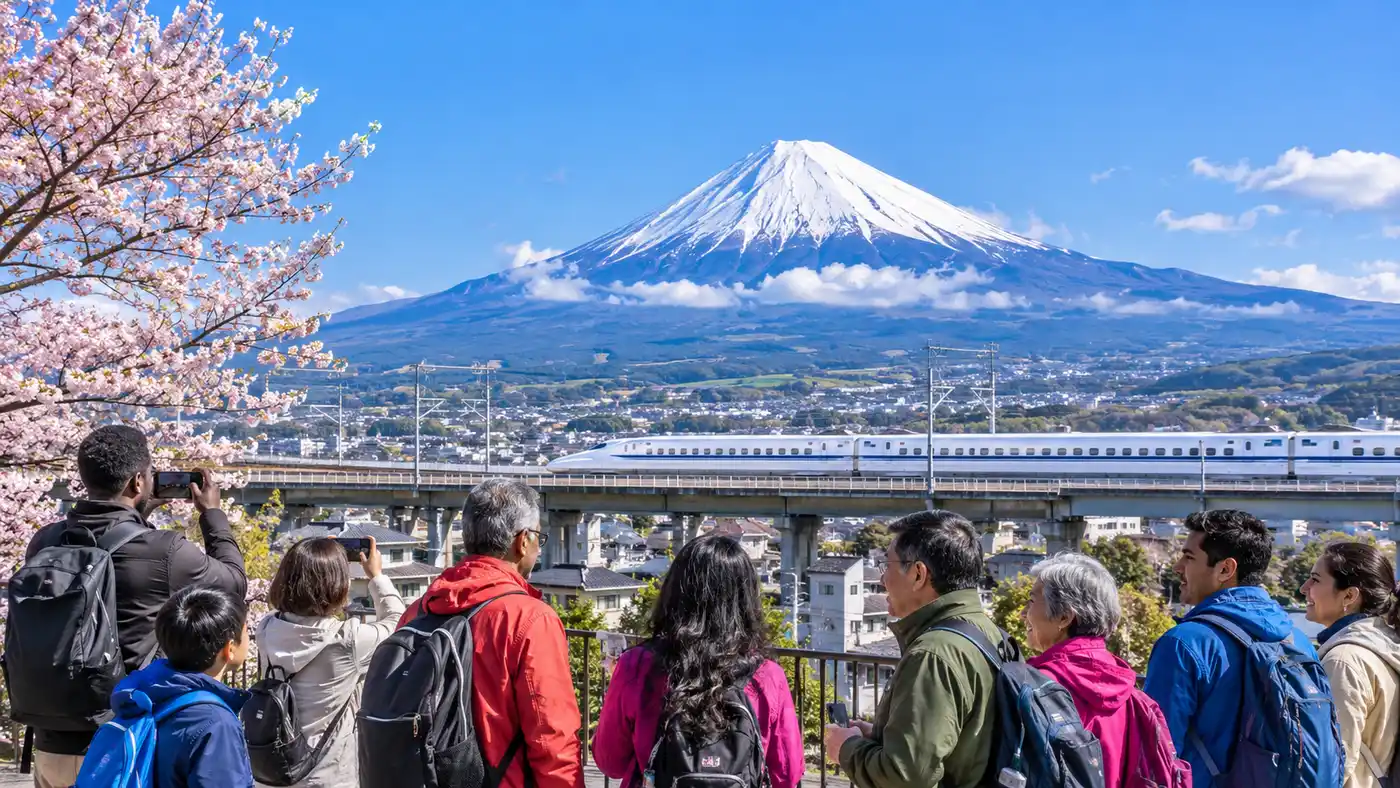
How to See Mt Fuji from the Shinkansen
You hear a sudden, collective rustle through the train car. Sleepy business travelers lean across the aisle, tourists reach for their bags, and twenty phone cameras click against the glass almost at the same second. If you want to see mt fuji from shinkansen kyoto to tokyo, you only get about seven minutes to pull it off. The bullet train moves at 285 kilometers per hour, which means Japan's most famous volcano approaches fast and disappears behind residential sprawl before you even finish adjusting your lens.
I have taken the Tokaido Shinkansen between the Kansai region and the capital at least thirty times. Sometimes the mountain shows up crisp, white, and enormous against a winter sky. Other times, you stare right into a flat wall of grey summer haze and see absolutely nothing. Getting the view comes down to three things: booking the correct window seat, knowing the exact minute mark to wake up, and understanding how Japanese weather behaves around Suruga Bay.
Book your mt fuji from tokyo experience:
Which Side of the Train to Sit on for Mt Fuji
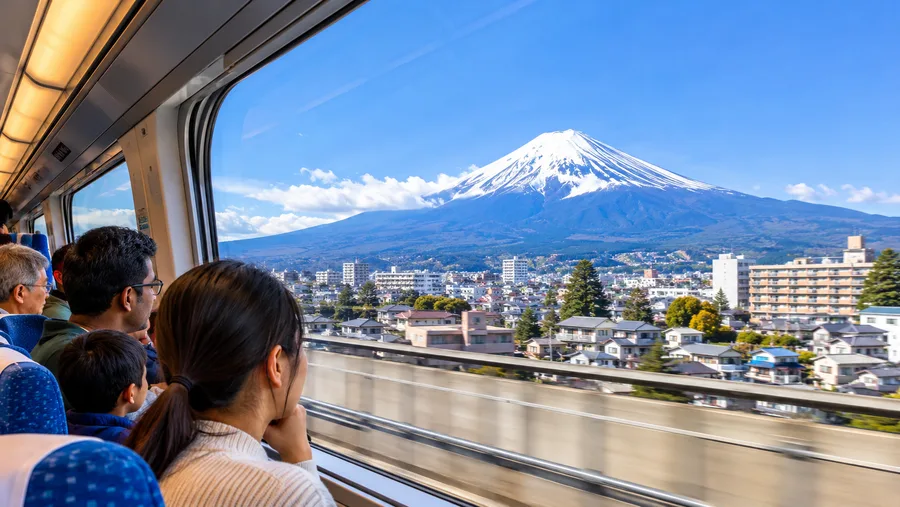
People get confused about the geometry of the train tracks, but the seating rule is simple. The Tokaido Shinkansen runs east-west along the southern Pacific coast, and Mount Fuji sits entirely to the north. Because Japanese train seats swivel 180 degrees at each terminal station so passengers always face forward, the mountain side never switches relative to the alphabet on your ticket.
If you are booking an ordinary car, you want Seat E. In a standard five-abreast car with a 3-by-2 layout, Seat E is the window seat on the two-seat side. It sits on the right side if you ride from Tokyo to Kyoto, and on the left side if you travel from Kyoto or Osaka back up to Tokyo. If you ride in the quieter Green Car with four seats across, your target is Seat D. Sit on side A or side C, and you will be craning your neck over three strangers to catch a glimpse.
If you get stuck on the wrong side, do not panic. The small vestibule windows between cars, right by the restrooms and trash bins, offer an unobstructed view. You can walk over five minutes before the mountain approaches and stand right by the door without bothering anyone in their seats.
| Direction | Standard Window | Green Car Window | Approximate View Window | Key Landmark Station |
|---|---|---|---|---|
| Tokyo to Kyoto / Osaka | Seat E (Right side) | Seat D (Right side) | 40 - 45 mins after departure | Passing Shin-Fuji Station |
| Kyoto to Tokyo | Seat E (Left side) | Seat D (Left side) | 1 hr 40 mins after departure | Passing Shizuoka Station |
| Shin-Osaka to Tokyo | Seat E (Left side) | Seat D (Left side) | 1 hr 55 mins after departure | Passing Shizuoka Station |
Pro tip: Set a vibrating phone alarm for 95 minutes after pulling out of Kyoto Station so you do not doze off and miss the entire mountain while scrolling on your phone.
When to See Mt Fuji on Shinkansen: Exact Timing and Landmarks
Timing depends slightly on whether you board a Nozomi, a Hikari, or a Kodama train. Nozomi is the fastest service, skipping smaller stations and covering the ground in roughly two hours and fifteen minutes. Hikari stops a couple more times, adding about twenty minutes to the run.
Departing Tokyo on a Nozomi, keep your eyes open right around the 40-minute mark. You will shoot through Shin-Yokohama, pass the green coastal foothills of Kanagawa, and zip into Shizuoka Prefecture. The mountain first looms between the hills near Mishima, but the main panoramic view happens directly outside Shin-Fuji Station at about minute 43. The entire north side opens wide, giving you a flat view across industrial roofs directly up to the summit.
Traveling east from Kyoto, is mt fuji on the way to kyoto from tokyo? Yes, but it arrives much later in your trip. You roll past Nagoya, cross Lake Hamana, and pass through the long tea fields of central Shizuoka. About 100 minutes after leaving Kyoto, the train clears Shizuoka Station. You cross the wide Fujikawa bridge roughly five minutes later, and the volcano appears directly over the riverbank on your left.
Booking Your Ticket: How to Reserve the Right Seats
Getting a seat on the mountain side requires a bit of planning, especially on Friday evenings or national holidays. You can reserve seats up to thirty days ahead through the official SmartEX app or website. If you use a physical Japan Rail Pass, you can book your seat assignments at any green JR ticket machine inside the station before you board.
You need to keep oversized baggage rules in mind. Japanese railway operators require reservations for suitcases with total dimensions between 160 and 250 centimeters. These baggage-area spots are placed at the very back row of each car. If you want a mountain view and have a large suitcase, you specifically need to book Seat 14E, 16E, or 20E depending on the car layout.
Note: Those back-row seats with luggage space sell out several days before standard seats, so book early if you travel with large bags.
If you prefer spontaneous travel and end up in the unreserved cars (usually cars 1 through 3 on the Nozomi), line up at the platform roughly 20 minutes before boarding. Once the doors slide open, walk down the aisle and claim any empty Seat E. Those two-seat rows fill up well before the three-seat side.
Book your mt fuji from tokyo experience:
Weather Realities: Can You Actually See Mt Fuji from Kyoto to Tokyo?
You can do everything right and still see nothing. Mount Fuji generates its own local weather system, pulling moisture off the Pacific and wrapping itself in dense cloud blankets by midday. The mountain is notoriously shy.
Winter gives you the highest chance of success. From December through February, dry Siberian air pushes across central Japan, clearing the haze and leaving the snow-covered cone standing out against deep blue skies. Summer is the absolute hardest time. Humidity builds rapidly over the bay, and the summit hides behind grey clouds roughly 75 percent of the time between June and August. If your heart is set on seeing the peak up close regardless of train speeds, consider making time for taking the train from Tokyo to Mt Fuji for an overnight stay in the Five Lakes region.
- Winter visibility: crispest air between 8:00 AM and 10:30 AM, with clean snow cover extending halfway down the flanks.
- Spring visibility: cherry blossoms bloom along the rail line in early April, but warm afternoons bring thick white haze.
- Summer visibility: mostly cloud-covered; your best odds are early morning departures on the first trains around 6:00 AM.
- Autumn visibility: clear days return in late October, offering crisp contrast before the first heavy snowfall covers the peak.
I always pull up a live webcam of the Shizuoka side before heading to the train platform. If the cameras at Shin-Fuji look grey, I take a nap instead of staring out the window for forty minutes. If the sky is clear, I get my camera ready.
What It Actually Looks Like: The 7-Minute Window
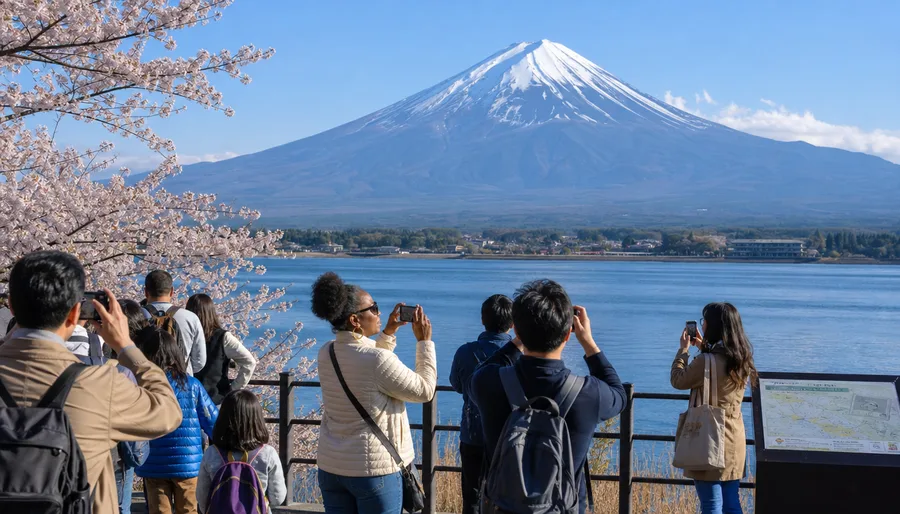
The landscape changes abruptly as you approach Fuji City. You pass small family green-tea farms terraced into the foothills, followed immediately by paper mills with tall industrial smoke stacks. Some people find the factory pipes disappointing in photos, but I love how weirdly industrial and real the Shizuoka coast feels against the ancient volcano behind it.
Shooting photos through a train window at near-maximum speed requires quick reflexes. Reflections from inside the cabin are your biggest enemy, alongside trackside utility poles that slice through your frame every three seconds. Put your phone or lens right against the glass to kill reflections, and switch your shutter speed high.
- Shutter speed setup: set your camera to at least 1/1000th of a second to freeze the rushing foreground telephone poles.
- Video technique: record 4K video at 60 frames per second for three continuous minutes, then pull high-res still frames later.
- Best landmark frame: shoot right as the train crosses the Fujikawa bridge where the gravel riverbed opens up without power lines.
- Interior glare: wear dark clothing or hold a dark jacket around your phone to eliminate reflections from the cabin ceiling lights.
The view lasts about three minutes of pristine, uninterrupted skyline, followed by another four minutes of partial views between trackside noise barriers and small hills. Then the train tilts into the next tunnel, and you are back to standard highway scenery.
Frequently Asked Questions about see mt fuji from shinkansen kyoto to tokyo
Can you see Mt Fuji from Kyoto to Tokyo on an evening train?
Only if your train passes the Shizuoka area before dusk. In winter, darkness falls around 5:00 PM, meaning any train leaving Kyoto after 3:15 PM will pass the mountain in deep shadow or complete blackness. Aim for morning trains for reliable light.
Which seats to see Mt Fuji from Kyoto to Tokyo if I travel in the Green Car?
Book Seat D. Green cars use a 2-by-2 seat configuration instead of the 3-by-2 layout found in standard class. Seat D is the window seat on the mountain side for trains running in both directions.
What if the train is completely sold out on Seat E?
Book an aisle seat in row D or C, then walk down to the vestibule between cars near the exit doors as you approach Fuji City. The doors have large glass panes that let you stand and look out freely without climbing over other passengers.
Quick Reference
- Standard car: Seat E
- Green Car: Seat D
- Tokyo departure: 40-45 minutes
- Kyoto departure: 100-105 minutes
Book your mt fuji from tokyo experience:
The Bottom Line
Catching Mount Fuji from a speeding Shinkansen is one of those quintessential Japan moments that never quite gets old. It costs nothing extra on your train ticket, and it turns a routine transit morning into an incredible memory. Pick Seat E when you reserve, set your alarm for the ninety-minute mark out of Kansai, and cross your fingers for clean coastal skies.
Read more about mt fuji from tokyo.